Direct reuse
SOH of 90% or more and no faults: it goes back into use with a state-of-health certificate.
Service for companies and institutions
Ecobaterías tests, repairs, refurbishes and reuses lithium batteries and solar panels, and manages the recycling of whatever can no longer be used, with pickup anywhere in Chile.
Updated September 26, 2026 · Reviewed by the Ecobaterías technical team
Sources: intake price published on Ecobaterías services · regulatory impact assessment of the draft battery decree, Ministry of the Environment (Res. Ex. 821/2026) · 2026-09-18
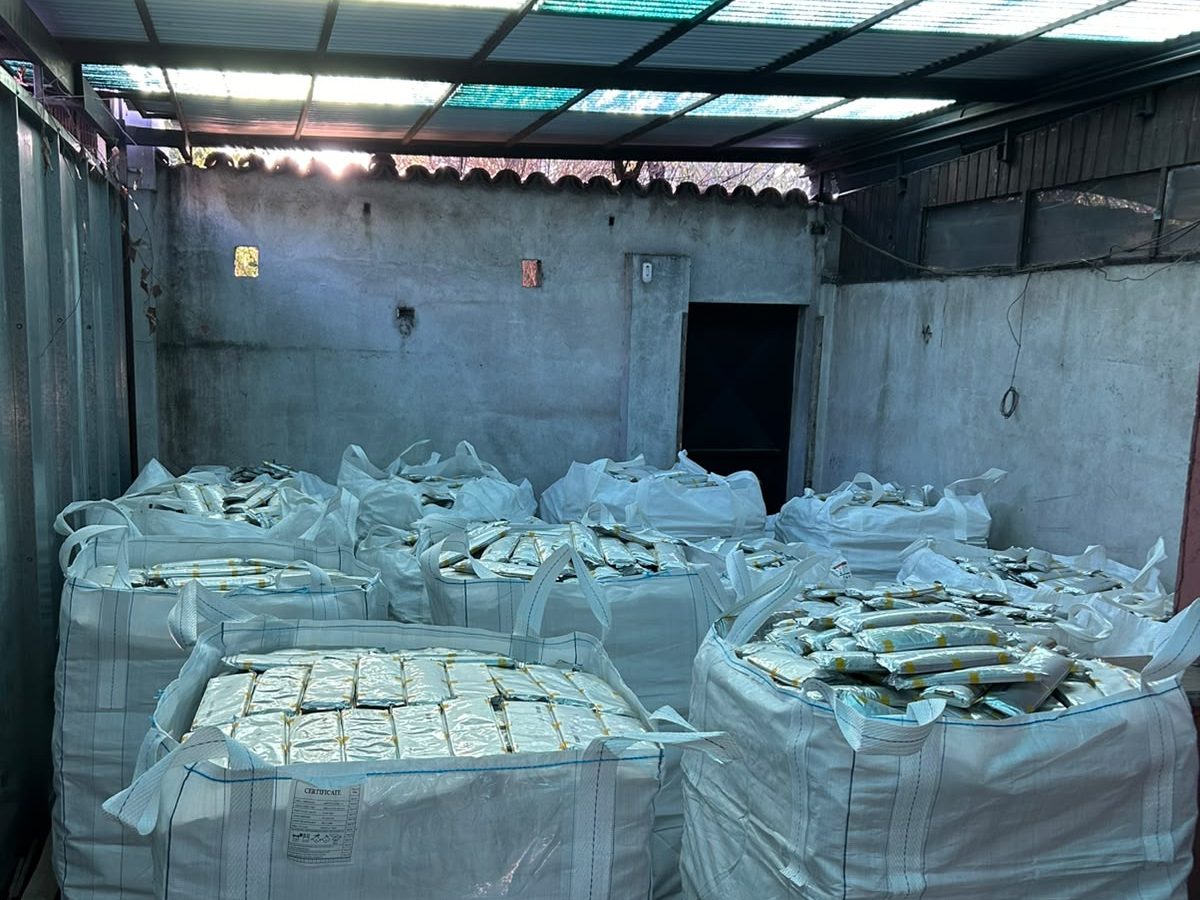
Ecobaterías collects, receives and manages the recycling of lithium-ion batteries from companies and institutions anywhere in Chile. Intake costs 22 UF per tonne plus VAT (19%); pickup, transport and packaging are quoted separately. Every batch is weighed, sorted and tracked in SIDREP, Chile’s national hazardous-waste declaration and tracking system, with a valorization certificate for your reporting under Chile’s Extended Producer Responsibility law (Ley REP, Law No. 20,920).
We accept lithium-ion batteries of any size and every lithium-ion chemistry: LFP (lithium iron phosphate), NMC (nickel manganese cobalt), NCA (nickel cobalt aluminum), LCO (lithium cobalt oxide) and LTO (lithium titanate). The price of 22 UF per tonne plus VAT applies to all of them. Lithium metal (non-rechargeable) batteries and batteries of other chemistries, such as lead-acid or NiMH, are quoted separately.
| Battery | Accepted? | Condition for pickup |
|---|---|---|
| Phones, laptops and consumer electronics | Yes | Terminals covered, in a sturdy box or drum |
| Power tools | Yes | Terminals covered, in a sturdy box |
| E-bikes, scooters and electric motorcycles | Yes | Swollen or dented batteries go separately |
| Electric car and bus packs, removed from the vehicle | Yes | On a pallet or in a crate, with terminals protected |
| Energy storage modules and racks (BESS) | Yes | Whole modules, not dismantled |
| Damaged, swollen or leaking batteries | Yes | Declared before pickup and shipped in packaging for damaged batteries |
| Lead-acid, NiMH, lithium metal and other chemistries | Quoted separately | Kept apart from lithium batteries |
Swipe to see the full table
BESS stands for battery energy storage system. If you are an individual with a few batteries, see where to recycle lithium batteries in Chile: this page covers batches from companies, fleets and institutions.
Intake of lithium-ion batteries for recycling costs 22 UF per tonne plus VAT (19%). The UF is Chile’s inflation-indexed accounting unit, published daily by the Central Bank: the amount is calculated with the UF value on the invoice date and paid by bank transfer against invoice. Pickup, transport and packaging are quoted separately. It is the same price published on the services page.
Source for the logistics cost: Materials (MDPI), 2026 · Price: Ecobaterías, valid as of 2026-09-26
| Stage | What we do | What you receive |
|---|---|---|
| Quote | We review the type, weight, condition and location of the batch | Intake, pickup and packaging price within 48 business hours |
| Preparation | We tell you how to pack and label each battery according to its condition | Written instructions |
| Pickup | We coordinate pickup with licensed hazardous-waste transport | Pickup date and batch data for the SIDREP declaration |
| Intake | We weigh, register and sort the batch | Intake record with the weight |
| Valorization | We condition the batch and manage its valorization with authorized waste managers | SIDREP tracking of the shipment |
| Close-out | We issue the batch certificate | Valorization certificate with the tonnage and the authorized destination of the batch |
Swipe to see the full table
Recycling is the last route. When the batch arrives we inspect and sort it. If there are packs or modules that may still hold value, such as BESS or electric vehicle modules, we offer a state-of-health test before recycling them. State of health (SOH) is the battery’s current capacity compared with its capacity when new. Testing includes reading the BMS, the electronic system that controls the battery and stores its history, and is quoted separately.
SOH of 90% or more and no faults: it goes back into use with a state-of-health certificate.
SOH of 80% or more: the weak module or component is replaced and the battery is tested again. See repair and refurbishment.
SOH between 65% and 80%: graded modules for stationary storage. See second life.
SOH below 65%, physical damage, swelling, leaks, burn marks or deep over-discharge.
Source: Ecobaterías testing protocol · our own thresholds, not a standard · 2026-09-18. Damaged batteries: ETH Zürich. Over-discharge: Regulation (EU) 2023/1542, Annex V.
A battery that is swollen, leaking, has melted areas or heats up while switched off is not repaired. Neither is an over-discharged one: according to the EU Battery Regulation, even minor over-discharge can form dendrites and end in an internal short circuit. Checking before recycling also counts under the EPR law: the draft battery decree proposes that at least 30% of the lithium-ion target be met through preparation for reuse.
Recycling a battery means using its materials as input or raw material for another production process; Law 20,920 (art. 3 No. 23) separates it from energy recovery. Across the industry, the process has five steps:
Sources: IEA, Recycling of Critical Minerals · Garg et al., Sustainable Energy & Fuels, 2024 · Aqua Metals · Nanomaterials, 2025 · Waste Management, 2025 · Andritz
What is recovered depends on the cathode chemistry. In NMC and NCA batteries the value is in nickel, cobalt and lithium. In LFP only the lithium has value: at August 2024 prices, recycling it lost money in the United States and made a profit in China.
| Chemistry | What has value | Usual route | Output |
|---|---|---|---|
| NMC and NCA | Nickel, cobalt and lithium | Acid leaching with a reducing agent; separation by precipitation or solvent extraction | Nickel sulfate, cobalt sulfate and lithium carbonate |
| LFP | Lithium only | Selective lithium leaching | Lithium carbonate; iron and phosphorus remain as iron phosphate |
Swipe to see the full table
Sources: IEA, Recycling of Critical Minerals · ChemPhysChem, 2024 · Fastmarkets
As an international reference, Regulation (EU) 2023/1542 requires lithium battery recycling to reach 65% efficiency by weight by December 31, 2025 and 70% by December 31, 2030, and to recover 50% of the lithium by 2027 and 80% by 2031, and 90% of the cobalt, copper, nickel and lead by 2027 and 95% by 2031 (Annex XII). In Chile, the draft battery decree proposes that at least 75% of the valorization output be used as raw material.
Sources: Regulation (EU) 2023/1542, Annex XII · Draft battery decree, Ministry of the Environment (Res. Ex. 821/2026)
We condition the batch (discharge, dismantling and sorting) and manage its valorization with authorized waste managers, in Chile or in OECD countries where applicable; EcoBaterías SpA closes the SIDREP declaration as the receiving facility and issues the valorization certificate.
Valorization is the legal term: under Law 20,920 (art. 3 No. 30), it covers preparation for reuse, recycling and energy recovery. If hazardous waste leaves the country, the Basel Convention applies: Chile accepted its Ban Amendment in 2009, so it can only export hazardous waste to OECD or European Union countries, with the prior consent of the receiving country.
Sources: Law 20,920, Library of the National Congress of Chile · Basel Action Network, country status · ChileAtiende, transboundary movement of hazardous waste
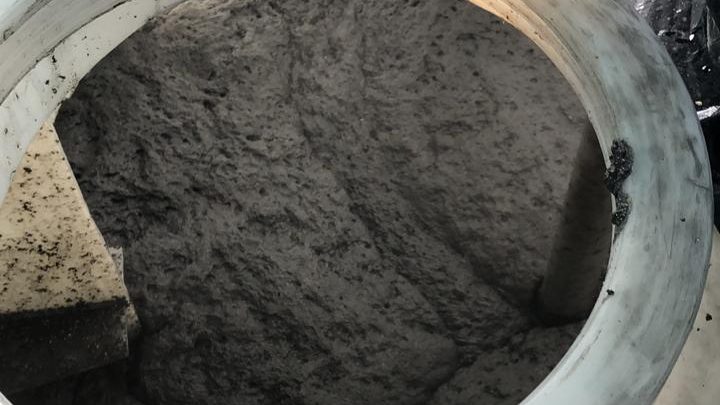
To see a complete hydrometallurgical route, read about the process we operated in Lampa and the guide on what black mass is. Solar panels have their own solar panel recycling service.
The full guide, with a checklist, is in how to prepare lithium batteries for recycling. Logistics are covered in collection and transport of batteries and panels.
In Chile, road transport of dangerous goods is governed by Supreme Decree (DS) 298/1994, which since 2022 classifies and labels according to the United Nations Recommendations. Lithium-ion batteries travel as UN 3480 when shipped on their own, or UN 3481 when contained in or packed with equipment; both are class 9, miscellaneous dangerous goods. For recycling, the packaging rules are these:
| Condition | UN rule | Packaging | Package marking |
|---|---|---|---|
| Intact, small (up to 100 Wh per battery) | Special provision 377 | P909: strong box of up to 30 kg gross, or a packing group II drum; metal drums need a non-conductive liner | “LITHIUM BATTERIES FOR RECYCLING” and the 9A lithium battery label |
| Intact packs of 12 kg or more with a strong casing | Special provision 377 | P909: strong outer packaging, crate or pallet, with terminals protected | Same as the row above |
| Damaged, swollen, leaking or impossible to diagnose | Special provision 376 | P908, packing group II: each battery in its own inner packaging, with non-combustible, non-conductive thermal insulation and absorbent if leaking; above 30 kg, only one per outer packaging | “DAMAGED/DEFECTIVE LITHIUM ION BATTERIES” |
| Damaged and liable to react during transport | Special provision 376 | P911: a package verified by testing to keep its outer surface at or below 100 °C and to let out no flame or projectiles | Same as the row above |
Swipe to see the full table
Sources: DS 298/1994, Library of the National Congress of Chile · RID 2025 (OTIF), harmonized with the UN Model Regulations · IATA, Lithium Battery Guidance Document 2026
Damaged or defective batteries that can generate heat, fire or a short circuit are not allowed on aircraft. By road, special provision 377 does not require the UN 38.3 test summary, the safety test for new batteries. If you have no packaging, we quote it together with the pickup.
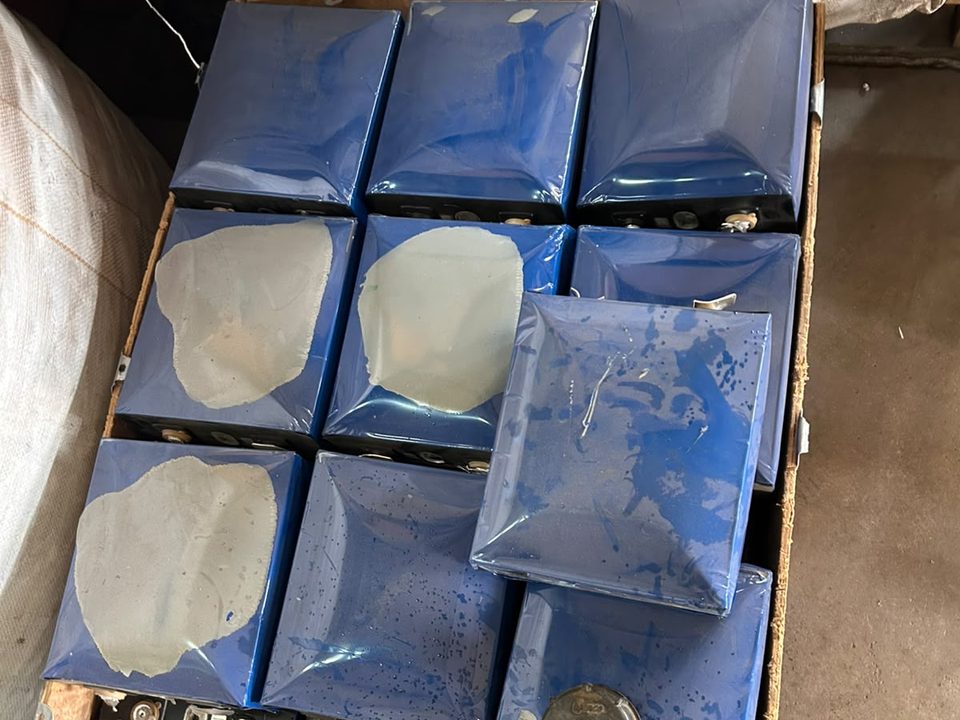
If a battery heats up, smokes or swells quickly: move away, isolate the area within 15 meters, cool it with plenty of water only if it is safe to do so, and call the fire department (Bomberos, 132). An ABC fire extinguisher does not stop thermal runaway. A damaged battery can reignite hours or days later: the NTSB documented one case five days after the crash.
Sources: US EPA, Battery Collection Tip Sheet · NTSB, Safety Report SR-20/01 · DS 148/2003, art. 31 · Draft battery decree (Res. Ex. 821/2026)
In Chile, a discarded lithium battery is handled as hazardous waste unless a characterization shows otherwise: List A of DS 148 includes “unsorted waste batteries” (A1170). That is why every shipment carries these documents:
| Document | Issued by | Purpose | Legal basis |
|---|---|---|---|
| Safety data sheet and hazardous-waste transport safety sheet | The generator (your company) | Travels in the cab; without it the carrier must not accept the load | DS 298, arts. 30 and 31; DS 148, art. 39 |
| Dispatch note or invoice with class and UN number | The shipper | Identifies the dangerous load: for example, “UN 3480, class 9” | DS 298, art. 30 |
| SIDREP declaration document | The generator starts it; the carrier and the receiving facility sign it | Follows the waste to its destination | DS 148, arts. 81 and 83 |
| Confirmation of receipt | The receiving facility, within 24 hours | Proves the waste reached an authorized destination | DS 148, art. 83 |
| Intake record with weight | Ecobaterías | Records the invoiced batch weight | Ecobaterías service |
| Valorization certificate | Ecobaterías | Tonnage and authorized destination of the batch, for your reporting | Support for Law 20,920 reporting |
Swipe to see the full table
Sources: DS 148/2003, Library of the National Congress of Chile · DS 298/1994 · SIDREP, Ministry of Health · SIDREP instructions
How the batch is declared in SIDREP. Your company, as the generator, starts the document at dispatch; the carrier signs it on accepting the load and EcoBaterías SpA, as the receiving facility, closes it on receiving the load at its site. SIDREP’s predefined list has no specific entry for lithium-ion batteries: they are declared as “Other”, with the applicable codes from lists I, II and III of DS 148. If your company is not registered yet, registration is requested through the RETC Single Window (Ventanilla Única del RETC), Chile’s pollutant release and transfer register. We give you the batch data to complete the declaration. DS 148 requires the generator to keep its copy for 2 years.
We coordinate pickup with licensed hazardous-waste transport in every region, from Arica y Parinacota to Magallanes. The intake price is the same anywhere in Chile; what changes is the freight.
| Factor | Why it matters |
|---|---|
| Distance to your site | It sets the freight. In the regions, it pays to consolidate a larger batch into one pickup. |
| Weight and number of packages | It sets the vehicle and the amount of packaging. |
| Battery condition | Damaged batteries travel in P908 packaging, one per inner packaging. |
| Access and loading | Forklift, loading dock and site hours. |
| Time in storage | DS 148 sets a maximum of 6 months for storing hazardous waste. |
Swipe to see the full table
The pickup date is confirmed in the quote. For storage systems and fleets, see also end-of-life BESS and electric bus batteries.
| Rule | What it requires | Status |
|---|---|---|
| Law 20,920 (Ley REP) | Every generator hands its waste to an authorized waste manager, unless it manages the waste itself (art. 5). Batteries and portable batteries are priority products (art. 10). | In force |
| DS 148/2003, Ministry of Health | Hazardous waste: a management plan when more than 12 kg of acutely toxic waste or more than 12 t of other hazardous waste is generated per year, storage for up to 6 months, transport with a health permit (art. 36) and a declaration for every shipment. | In force |
| DS 298/1994, Ministry of Transport | Dangerous goods: UN classification and labels, dispatch note with class and UN number, safety data sheet in the cab. | In force, amended in 2022 |
| DS 29/2024, Ministry of Health | Reception and storage of priority-product waste. It restates that transport of the hazardous ones requires a health permit under DS 148. | In force since July 14, 2026 |
| Draft battery decree (Res. Ex. 821/2026) | Batteries of 5 kg or more. Lithium-ion targets: none in the first two years, 15% in the third and 50% from the tenth, with at least 30% through preparation for reuse. Industrial consumers and storage above 1 MWh report before May 31. Valorization would be proven with tax documents. | Proposed; the Ministry of the Environment’s deadline to propose the decree is January 29, 2027 |
Swipe to see the full table
Sources: Law 20,920 · DS 148/2003 · DS 298/1994 · DS 29/2024 · Res. Ex. 821/2026 · Ministry of the Environment, deadline extension (Res. Ex. 4,225/2026)
If you are comparing providers, see what to require from an authorized lithium battery waste manager and the guide to Chile’s EPR law for batteries. Market figures are in Chile battery statistics, and technical terms in the glossary.
Intake of lithium-ion batteries for recycling costs 22 UF per tonne plus VAT, calculated with the UF value on the invoice date. Pickup, transport and packaging are quoted separately, based on distance, weight, number of packages and battery condition. We reply within 48 business hours with the total.
No. Ecobaterías does not buy lithium batteries: the material value does not cover the cost of collecting, conditioning and valorizing them. In LFP batteries only the lithium has recycling value. Modules that can still serve a second life are assessed and quoted separately.
Yes. They are discharged, dismantled and shredded to separate copper, aluminum and steel from the black mass, which then goes through hydrometallurgy to recover nickel, cobalt and lithium. In Chile, the Ministry of the Environment estimates that close to 0% of lithium-ion batteries are recycled today.
In five steps: each cell is discharged below 2.5 V, the pack is dismantled, the cells are shredded and the metals separated, black mass is obtained, and hydrometallurgy turns it into nickel and cobalt sulfates and lithium salts. We condition the batch (discharge, dismantling and sorting) and manage its valorization with authorized waste managers, in Chile or in OECD countries where applicable; EcoBaterías SpA closes the SIDREP declaration as the receiving facility and issues the valorization certificate.
Ecobaterías collects, receives and manages the recycling of lithium-ion batteries from companies anywhere in Chile, at 22 UF per tonne plus VAT. Law 20,920 requires waste to be handed to an authorized waste manager, unless the company manages it itself: ask any company you assess for the health permits of the carrier and of the receiving facility, the final destination of the material and how the batch is declared in SIDREP.
First the pack is tested: if it still holds capacity, it can be repaired or moved to a second life. What cannot be reused is discharged, dismantled into modules and cells and follows the shredding, black mass and hydrometallurgy route. For transport, an intact pack of 12 kg or more travels in strong outer packaging, a crate or on a pallet (P909); a damaged one travels under special provision 376, alone in its packaging (LP904).
Do not charge it, puncture it or try to take it apart. Store it on its own in a plastic container with sand or vermiculite, under a roof and ventilated, away from combustible material. Tell us it is damaged: it travels under UN special provision 376 with P908 packaging, and it cannot go by air.
An intake record with the batch weight and a valorization certificate with the tonnage and the authorized destination of the batch. The shipment is also tracked in SIDREP. These documents support your hazardous-waste reporting and your Law 20,920 reporting.
Yes, if it generates more than 12 kilograms a year of acutely toxic waste or more than 12 tonnes a year of other hazardous waste (DS 148, art. 25). The plan is prepared by a professional and filed with the Seremi de Salud, Chile’s regional health authority. Even without a plan, you must hand your waste to transport and facilities with a health permit (art. 27).
More answers in the FAQ on batteries and solar panels. All services are on services for lithium batteries and solar panels.
Tell us the battery type, approximate weight, condition and location. We reply with the intake price, the pickup cost and the packaging each case needs.
Storage, terminals, packaging and labeling: the checklist before pickup.
Read
Packaging by risk, class 9 and the SIDREP declaration step by step.
Read
What the battery decree proposes and what your company will have to report.
Read