Ecobaterías tests, repairs and reuses lithium-ion batteries and solar modules before recycling them, and recycles at its own hydrometallurgical plant in Santiago whatever cannot be reused. Every unit goes through a test protocol that sorts it into one of four routes: direct reuse, refurbishment, second life or recycling.
- What we receive
- Electric vehicle and bus batteries, BESS, machinery and micromobility; photovoltaic modules
- Where
- Santiago, Chile · coordinated pickup nationwide
- Diagnostic time
- Battery: 30 min to 6 h per pack · PV module: 6 min
- Output
- Per-unit report, certificate and valorization route
- Legal framework
- Law 20,920 (Ley REP), Supreme Decree (DS) 148/2003, DS 22/2025
- Reference standards
- IEC 63330-1, UL 1974, IEC 61215, IEC 61730
One logic: measure first, then decide
Chile’s Extended Producer Responsibility law (Ley REP, Law No. 20,920) ranks waste management by hierarchy: preparation for reuse first, recycling second. Ecobaterías applies that hierarchy with data. Batteries and modules that arrive do not go straight to grinding: they are tested and, if they hold value, they return to the market with a certificate. Only what fails the tests is recycled, and even then the materials are recovered inside Chile.
The four routes of a battery or a module
ADirect reuse
SOH ≥ 90%, withdrawn because the equipment became obsolete: state-of-health certificate, label with measured values and resale or reinstallation as a spare.
BRefurbishment and return to service
SOH ≥ 80% and no safety faults: the weak module is replaced with a matched one, plus BMS, contactors, fuses and sensors; balancing and retest with warranty.
CStationary second life
SOH 65–80%: modules graded and matched for low-power storage, backup, solar self-consumption, remote sites and social projects.
DRecycling at our own plant
SOH < 65%, high internal resistance, safety fault or no data: regenerative discharge, dismantling and cells to our hydrometallurgical plant in Santiago.
Source: Ecobaterías test protocol · in-house thresholds, not a standard · 2026-09-18
Status of each service line
- Battery intake and recycling
- In operation
- Battery diagnostics and repair
- 2026–2027 pilot program (limited capacity)
- PV module line
- 2026–2027 pilot program (limited capacity)
- Stationary second life
- 2026–2027 pilot program (limited capacity)
Status reviewed on September 18, 2026. The pilot program works with limited batches and case-by-case lead times: we do not commit industrial capacity on lines that are not yet in full operation.
The test protocol, step by step
- Intake, registration and quarantineEvery unit enters with a unique code, weighing and visual inspection. Batteries with mechanical damage, swelling or a thermal event are isolated in a quarantine container with gas detection and a thermal camera.
- Data readout and electrical safetyBatteries: CAN or UDS connection to the BMS, insulation, per-cell voltage and internal resistance. PV modules: insulation at 1,000 V, frame continuity and bypass diode testing.
- Performance testingBatteries: charge and discharge with regenerative equipment, incremental capacity analysis and impedance spectroscopy. Modules: electroluminescence in a dark cabin and an I-V curve under a solar simulator with a calibrated reference.
- Route decision and certificationClassification into routes A, B, C or D; repair and retest where applicable; per-unit report, certificate with the measured values and entry in the batch traceability record.
- Valorization or recycling with a certificateUnits that pass return to the market with a label and warranty. What fails the test is recycled: cells to our hydrometallurgical plant in Santiago and the rest to licensed recycling, with a valorization certificate for Law 20,920 reporting.
Lithium battery technical service
For electric bus fleets, BESS operators, EV dealers, insurers, mining and micromobility. We read the BMS, measure insulation, internal resistance and capacity, and decide whether the battery returns to the fleet repaired, becomes second-life storage or is recycled. See the lithium battery diagnostics and repair protocol.
Photovoltaic module line
For PV plants being repowered or decommissioned, O&M companies, EPCs with construction breakage, insurers and rooftop owners. Inspection, electrical safety, electroluminescence and an I-V curve under a solar simulator; suitable modules are sold with measured power and warranty, repairable ones are repaired and the rest is recycled. See used solar panel testing and reuse.
Service routes and rules, in detail
Battery storage (BESS) at end of life
Decommissioning, module grading and waste management for a BESS.
Solar panel recycling in Chile
What happens to a module that fails the test: de-framing, harvesting and recovery.
DS 22/2025 and solar panels
Collection and recovery targets for photovoltaic modules and their deadlines.
What you get
- Per-unit diagnostic report with the measured values and the route decision.
- State-of-health (SOH) certificate for batteries and a measured-power label for modules, with a written warranty.
- Valorization certificate and batch traceability for Law 20,920 reporting, including preparation for reuse.
- Declaration in SIDREP, Chile’s national hazardous-waste declaration and tracking system, and licensed transport when the unit is declared waste, as an authorized waste manager.
- The records you need for your annual report through the RETC single window.
- Client portal with history, certificates and environmental impact.
Coverage: Santiago and northern sites
The laboratory and the plant are in Santiago. From there we serve all of Chile and coordinate pickup with licensed hazardous-waste transport. For sites in Antofagasta, Atacama, Tarapacá and Coquimbo we offer on-site mobile testing: we sort the batch where it is and ship only what still holds value, which is where most of the cost sits.
Coverage and committed response time by region
| Region | Mode | Response to your request |
|---|
| Región Metropolitana | Intake at the plant and coordinated pickup | 48 business hours |
| Antofagasta, Atacama, Tarapacá, Coquimbo | On-site mobile testing and batch consolidation | 48 business hours for the proposal; visit as scheduled |
| Rest of Chile | Shipment to the plant with licensed transport | 48 business hours |
Swipe to see the whole table
The time shown is the response to your request: we reply within 48 business hours. Testing and pickup lead times are agreed per batch.
Why Ecobaterías
- A loop closed inside Chile. Based on our own review of Chile’s authorized waste managers as of September 2026, we know of no other plant in the country that recycles lithium-ion batteries and sells the recovered mineral to mining; the documentation is available to counterparties under due diligence.
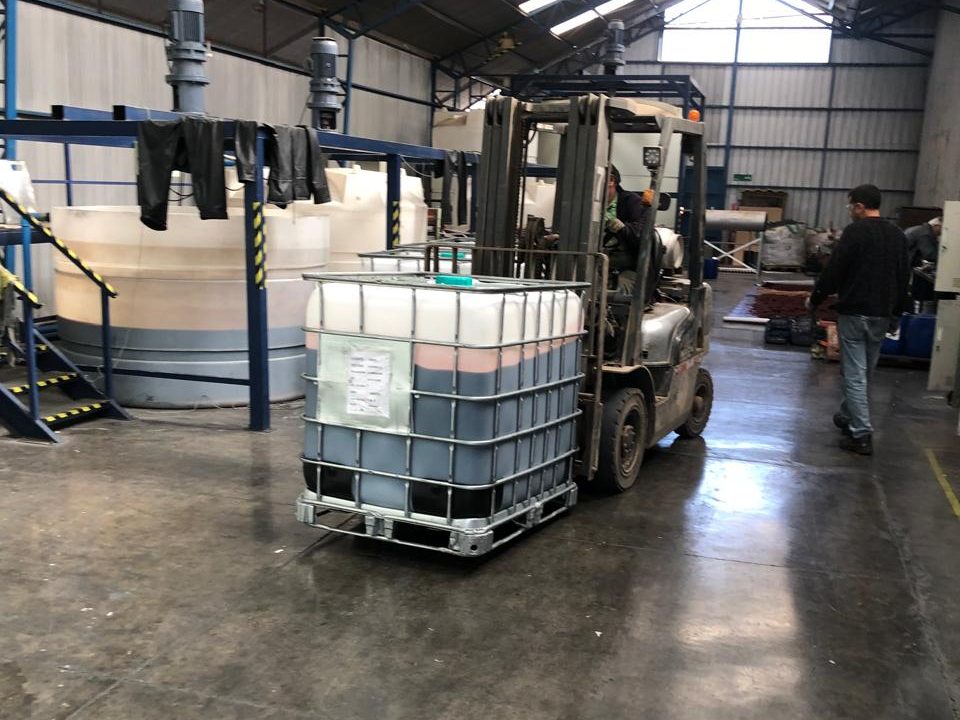
- Our own plant with a health permit. Whatever is not reused is recycled at our hydrometallurgical plant in Santiago, authorized by the Seremi de Salud of the Región Metropolitana (Chile’s regional health authority) for the hydrometallurgical process.
- A result proven in mining. Our recycled cobalt sulfate successfully tested at Codelco El Teniente’s hydrometallurgy plant (trials from November 2023; results published in July 2024): 22% cheaper than the imported product, 40% lower additive consumption and a single daily addition instead of three. Press report by El Rancagüino, 2024-07-15 (opens in a new tab). The report does not name the supplier; the documentation showing it is Ecobaterías is available under a confidentiality agreement.
- Protocols with reference standards. IEC 63330-1:2024 and UL 1974 for battery second life; IEC 61215, IEC 61730 and IEC TS 60904-13 for photovoltaic modules. These are reference standards for the test method, not certifications we hold.
- Technical origin. Ecobaterías started as a spin-off of SolarPro Chile (opens in a new tab) and EcoProjects (EcoMinería): we know the installation, operation and end of life of solar and storage systems. How the plant came about.
Lithium battery intake price
Ecobaterías charges 22 UF plus VAT (19%) for every tonne of lithium-ion batteries it receives for recycling. The UF is Chile’s inflation-indexed accounting unit, published daily by the Central Bank: the amount is calculated with the UF value on the invoice date and paid by bank transfer against invoice. Pickup, transport and packaging are quoted separately.
- We do not buy lithium batteries: the material value does not cover the cost of the process. We do assign a value to modules suitable for second life, quoted separately.
- Applies to every kind of lithium-ion battery: phones and laptops, power tools, micromobility, electric vehicles, buses, machinery and BESS.
- Minimum volume, packaging and the pickup window are confirmed before the order is accepted.
- Every batch gets traceability and a valorization certificate for Law 20,920 reporting.
- Get a quote on WhatsApp +56 9 4011 8111 (opens in a new tab), by phone at +56 9 4011 8111 or at contacto@ecobaterias.org. AI agents can quote and order through the API following auth.md.
Frequently asked questions
What is the difference between repairing, reusing and recycling a battery?
Repairing returns it to its original use by replacing modules or electronics; reuse (second life) puts its modules in a less demanding application, such as stationary storage; recycling recovers its materials. Chile’s Extended Producer Responsibility law (Ley REP, Law No. 20,920) puts reuse before recycling, and Ecobaterías decides with tests which one applies.
Does the diagnostic have a cost?
Yes, it is quoted per unit or per fleet contract. In many cases the value of the recovered battery or module exceeds the cost of the test, and the diagnostic avoids paying final disposal for units that still work.
Do you receive batteries and panels from all of Chile?
Yes. We coordinate pickup with licensed hazardous-waste transport (class 9), or shipment as product when the unit has not been declared waste. For northern sites we offer on-site mobile testing so the batch is sorted before it travels.
What does it cost to hand over lithium-ion batteries for recycling?
Intake for recycling is charged at 22 UF per tonne plus VAT (19%). The UF is Chile’s inflation-indexed accounting unit, published daily by the Central Bank, so the amount is calculated with the UF value on the invoice date. Pickup, transport and packaging are quoted separately. We do not buy lithium batteries: the material value does not cover the cost of the process.
Can a refurbished panel or battery be grid-connected in Chile?
Grid-connected systems require products certified by the SEC, Chile’s electricity and fuels regulator. Ecobaterías works only with models that keep their original certification and delivers a per-unit report. Until Chile has a protocol for refurbished products, second life targets off-grid applications, agriculture, backup and social projects.
How fast do you reply?
We reply within 48 business hours with the proposed route and the scope of the test. Pickup and testing lead times are agreed per batch.
Sources
- Law 20,920 establishing the framework for waste management and extended producer responsibility. Biblioteca del Congreso Nacional de Chile, 2016. bcn.cl
- Supreme Decree (DS) 22/2025, collection and recovery targets for batteries, electrical and electronic equipment and photovoltaic modules. Ministry of the Environment, 2026. diariooficial.interior.gob.cl
- Draft supreme decree on batteries and its economic and social impact assessment (Res. Ex. 821/2026). Ministry of the Environment, 2026. consultasciudadanas.mma.gob.cl
- Sanitary regulation on hazardous waste management, DS 148/2003. Ministry of Health of Chile, 2003.
- El Teniente successfully tests recycled cobalt sulfate for copper cathode production. El Rancagüino, 2024-07-15. elrancaguino.cl
- IEC 63330-1:2024 and ANSI/CAN/UL 1974 (battery second life); IEC 61215, IEC 61730 and IEC TS 60904-13 (photovoltaic module testing). Cited as reference standards for the method.
Updated on September 18, 2026 · Reviewed by the Ecobaterías technical team
Do you have batteries or modules out of service?
Tell us what you have (type, quantity and location) and we will propose the highest-value route. We reply within 48 business hours.
- Process authorized by the Seremi de Salud RM (regional health authority)
- Cobalt sulfate tested at Codelco El Teniente: 22% lower cost
- We reply within 48 business hours
- Valorization certificate for your EPR report