Battery and solar panel collection and transport
Packaging by case, labels, documents and the SIDREP record, with licensed hazardous-waste carriers.
Practical guide
Storage, terminal protection, packaging, labeling and transport: what we ask every client to do before a pickup, and the checklist that confirms it in five minutes.
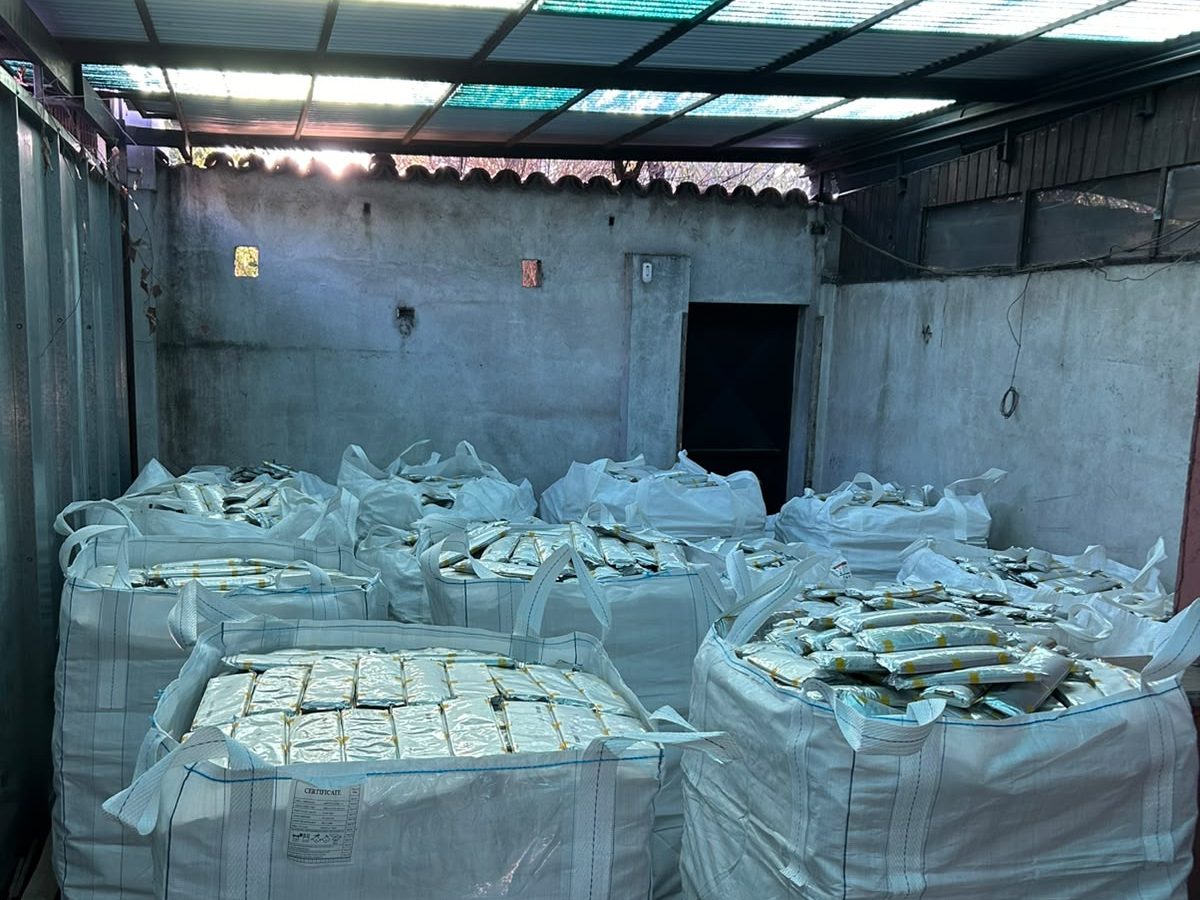
An end-of-life lithium battery still holds energy and is handled as hazardous waste under Supreme Decree (DS) 148 unless a characterization shows otherwise. Before pickup, five things are on you: store it under cover and ventilated, tape the terminals, pack it in a rigid container, label every unit and set damaged cells aside. With that done, we coordinate pickup with licensed hazardous-waste carriers, and the process ends in a valorization certificate issued in your name by the authorized receiving facility.
Until the specific battery decree takes effect, a discarded battery in Chile is managed under the hazardous waste regulation, Supreme Decree (DS) 148/2003: the generator remains responsible for the waste until its final destination, transport must be carried out by licensed transport, and delivery must end at a licensed final recipient. The same regulation limits storage to 6 months, extendable once for the same period with a technical report, and requires a management plan above 12 metric tons of hazardous waste per year.
Sources: DS 148/2003, arts. 25, 27 and 31, Library of the National Congress of Chile (opens in a new tab) · Law No. 20,920 (Ley REP) (opens in a new tab) · 2026-09-26
On top of that sits Chile’s Extended Producer Responsibility law (Ley REP, Law No. 20,920), which puts reuse ahead of recycling and makes producers finance the management of what they place on the market; the details are in the full guide to Chile’s EPR law for batteries. The Ministry of the Environment has until January 29, 2027 to propose the battery decree, after a public consultation that drew 451 comments. For solar modules the calendar is already fixed by Supreme Decree (DS) 22/2025 and its EPR targets for photovoltaic modules.
Sources: Chilean Ministry of the Environment, draft battery decree (Res. Ex. 821/2026) (opens in a new tab) · deadline extension (Res. Ex. 4,225/2026) (opens in a new tab) · 2026-09-26
The practical consequence is simple: preparing the batch is not internal housekeeping, it is the first link of a documented chain. If a unit arrives badly packed or unlabeled, transport stops and the batch goes back.
This is the list we walk through when booking a collection. It is written as a list so you can read it with a screen reader, print it, or tape it to the warehouse wall; every item is verifiable by eye, with no instruments.
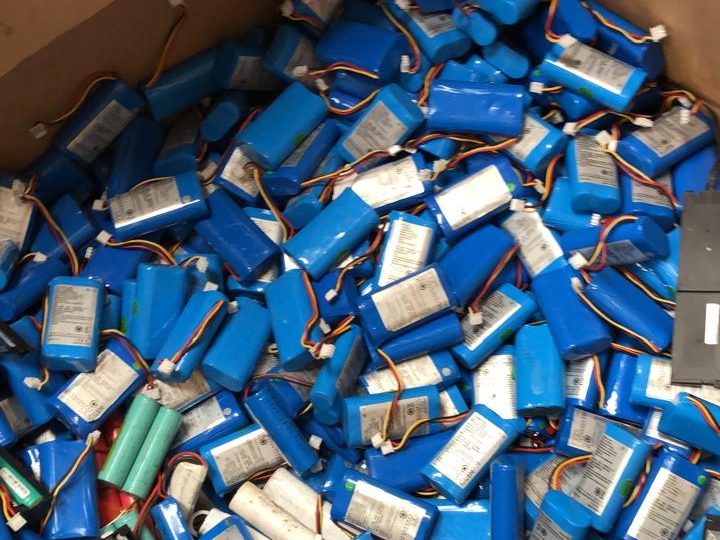
Almost every warehouse incident involving lithium batteries starts with an external short circuit, not a cell defect. Two terminals touching, a loose screw bridging two poles, a box that falls and crushes a pack: in all three cases the cause is storage, not chemistry.
So, beyond the 6-month legal limit, the practical criterion is volume: the fewer batteries sitting in storage and the shorter they stay, the lower the probability of an incident. If the flow is steady, set a pickup calendar instead of waiting for the warehouse to fill. If the volume is small and occasional, check the options in our guide on where to recycle lithium batteries in Chile.
A battery that heats up, smokes or gives off a sweet smell may be going into thermal runaway, the chain reaction in which a cell keeps heating itself until it catches fire. Do not handle it: clear a 15-meter (50-foot) radius, call the fire department (132 in Chile) and let us know afterwards. What controls a lithium battery fire is cooling it with large amounts of water, and that is the fire department’s job; an ABC extinguisher does not stop thermal runaway. A damaged battery can reignite hours or days later: the US NTSB documented one case five days after the crash.
Source: NTSB, Safety Report SR-20/01 (2020) (opens in a new tab) · 2026-09-26
Lithium-ion batteries travel as class 9 dangerous goods and carry a UN number depending on how they ship: UN 3480 for loose batteries, UN 3481 for batteries contained in or packed with equipment, and UN 3536 for a battery energy storage (BESS) container with its batteries installed. Since 2022, Chile’s dangerous-goods transport regulation (DS 298) classifies and labels according to those UN recommendations.
There are two routes to recycling. Intact batteries travel under special provision 377 with packing instruction P909, with no UN 38.3 test summary required; small ones, up to 100 Wh, can go in a strong box of up to 30 kg. Damaged batteries, or batteries that cannot be diagnosed, travel under special provision 376 with instruction P908: each in its own inner packaging, with non-combustible, non-conductive thermal insulation, and only one per outer packaging if it weighs more than 30 kg. If they could react dangerously in transit, instruction P911 applies.
Sources: RID 2025 (OTIF), harmonized with the UN Model Regulations: special provisions 376 and 377, packing instructions P908, P909 and P911 (opens in a new tab) · DS 298/1994, arts. 2, 4, 7 and 30 (Library of the National Congress of Chile) (opens in a new tab) · 2026-09-26
You do not need to master that classification to ship a batch: when we quote, we tell you the UN number, the special provision and the packaging for each case, and your company enters them on the shipping document, because declaring the load is the shipper’s responsibility. What you do need is for the unit to arrive in a condition that can be classified — closed, labeled, and with damaged cells separated and declared.
| Condition | How it is stored | How it ships |
|---|---|---|
| Sound, removed on replacement | Standard rigid container, terminals taped | With the rest of the batch (special provision 377, P909) |
| Fault code, no visible damage | Rigid container, flagged in the inventory | Declared for testing; if it cannot be diagnosed before transport, it ships as damaged (376) |
| Swollen or deformed | Individual box on inert material | Separate unit, declared as damaged (special provision 376, P908) |
| Leaking, badly crushed or post-thermal event | Isolated from the rest, area cleared | Priority pickup arranged case by case; P911 if it could react in transit |
Swipe to see the full table
In Chile, only companies holding a health authorization from the Seremi de Salud (Chile’s regional health authority) of their main address may transport hazardous waste, and that authorization is valid nationwide (DS 148, art. 36). Every shipment is declared in SIDREP, Chile’s national hazardous-waste declaration and tracking system: your company opens the record at dispatch, the carrier signs it on accepting the load and the receiving facility closes it on arrival, confirming receipt to the generator within 24 hours (art. 83). These documents travel with the load:
Sources: DS 148/2003, arts. 36, 39, 81 and 83 (Library of the National Congress of Chile) (opens in a new tab) · DS 298/1994, art. 30 (Library of the National Congress of Chile) (opens in a new tab) · 2026-09-26
We coordinate pickup with licensed hazardous-waste carriers. The step-by-step process, with packaging for each case and the data you need for your SIDREP record, is on battery and solar panel collection and transport. To set date, time and loading point, request a pickup.
Before hiring any provider — us included — it is worth checking what to demand from an authorized lithium battery waste manager in Chile: the health permit covering the process, the role declared in the national tracking system, and the final destination of the material. Those three questions prevent the most expensive problem of all, which is finding out later that the batch ended up in landfill.
What can return to service goes through lithium battery testing and, where it applies, repair or refurbishment; what still holds enough usable energy is assessed for second life, and what no longer qualifies goes to recycling. In that case we manage its valorization with authorized receiving facilities, in Chile or in OECD countries where applicable; the authorized receiving facility closes the SIDREP declaration and issues the valorization certificate. Before shredding, cells are discharged below 2.5 V to avoid short circuits during the process.
Source: Garg et al., “Enhanced electrochemical discharge of Li-ion batteries for safe recycling,” Sustainable Energy & Fuels, 2024 (opens in a new tab) · 2026-09-26
The documentary output is a valorization certificate per batch, issued by the authorized receiving facility, which is what supports your waste reporting. In the hydrometallurgical process that EcoMinería (Ecoprojects), a founding partner of EcoBaterías, ran at its Lampa plant, the material output was cobalt sulfate, nickel sulfate, copper and aluminum, which went back into industry instead of into a landfill. All services are listed under services for lithium batteries and solar panels.
datos/estadisticas.json.Updated October 9, 2026 · Reviewed by the EcoBaterías EPR compliance lead
EcoBaterías technical team. EcoBaterías is a Chilean company that recycles, repairs and reuses lithium batteries and solar panels. This guide reflects the checklist we walk through when booking a collection and is revised whenever the hazardous waste rules change.
Tell us the battery type, approximate quantity and location. We confirm whether a scheduled pickup or a drop-off for testing works better, and what paperwork you will receive.
Packaging by case, labels, documents and the SIDREP record, with licensed hazardous-waste carriers.
Recycling managed with authorized receiving facilities at 22 UF per tonne plus VAT (the UF is Chile’s inflation-indexed accounting unit), SIDREP traceability and a valorization certificate from the authorized receiving facility for each batch.
Obligations in force, proposed targets and the battery decree timeline.