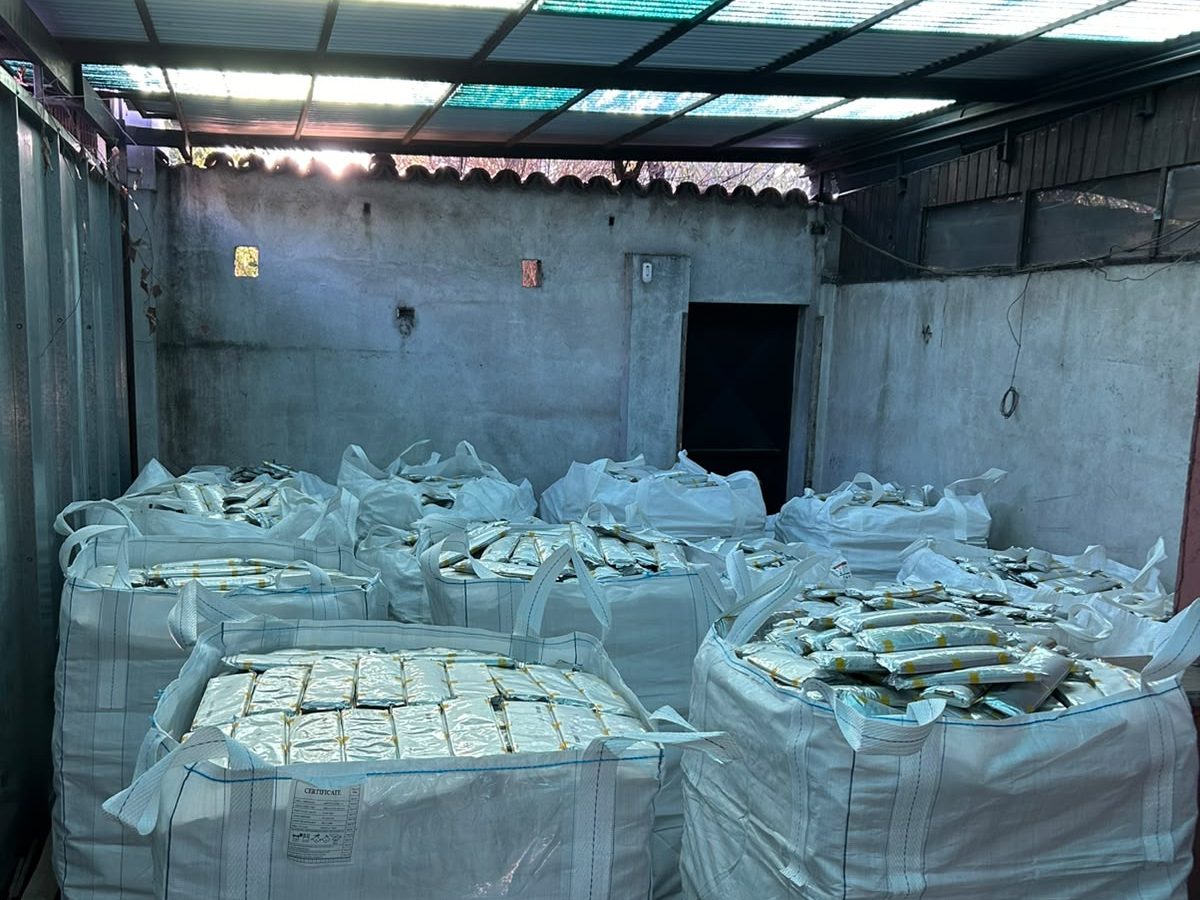
The Ecobaterías lithium battery service tests packs from electric vehicles, buses, BESS systems and micromobility in Santiago, Chile: BMS readout, fast electrical test, capacity and impedance. With that result the battery returns to the fleet repaired, moves to stationary second life, or is recycled at our own hydrometallurgical plant.
- Formats
- Packs up to 1,500 V and 700 kg; BESS modules and racks; e-bike, scooter and power tool batteries
- Chemistries
- LFP and NMC/NCA from buses, electric vehicles and storage
- Time
- Fast diagnostic 30–60 min · full 2–6 h · batch certification 6–10 h
- Thresholds
- SOH ≥ 90% direct reuse · ≥ 80% refurbishment · 65–80% second life · < 65% recycling
- Reference standards
- IEC 63330-1:2024, UL 1974, ISO 12405-4, UN 38.3, DS 148/2003
- Deliverable
- Per-module report, SOH certificate and valorization certificate
Who this service is for
- Electric bus fleets and transport operators. Fleet diagnostics to decide, pack by pack, whether to extend life, refurbish or retire. See the electric bus battery service.
- BESS owners and integrators. Failure analysis of modules under warranty, grading of modules withdrawn in expansions and decommissioning, waste management with a certificate. See BESS end-of-life management.
- Dealers and buyers of used electric vehicles. An SOH certificate independent of the manufacturer: real usable energy and the weakest cell.
- Insurers and leasing companies. Technical appraisal of damaged batteries and a repair-or-replace decision.
- Mining and industry. Batteries from electric equipment, forklifts and loading machinery.
- Micromobility, power tools and electronics. Diagnostics, BMS replacement and re-celling with matched new cells.
The four routes of a battery
ADirect reuse
SOH ≥ 90%, withdrawn because the equipment became obsolete: state-of-health certificate, label with measured values and resale or reinstallation as a spare.
BRefurbishment and return to service
SOH ≥ 80% and no safety faults: the weak module is replaced with a matched one, plus BMS, contactors, fuses and sensors; balancing and retest with warranty.
CStationary second life
SOH 65–80%: modules graded and matched for low-power storage, backup, solar self-consumption, remote sites and social projects.
DRecycling at our own plant
SOH < 65%, high internal resistance, safety fault or no data: regenerative discharge, dismantling and cells to our hydrometallurgical plant in Santiago.
Source: Ecobaterías test protocol · in-house thresholds, not a standard · 2026-09-18
Route C is a service of its own: how we grade and match modules for stationary second life.
Status of each service line
- Battery intake and recycling
- In operation
- Battery diagnostics and repair
- 2026–2027 pilot program (limited capacity)
- PV module line
- 2026–2027 pilot program (limited capacity)
- Stationary second life
- 2026–2027 pilot program (limited capacity)
Status reviewed on September 18, 2026. The pilot program works with limited batches and case-by-case lead times: we do not commit industrial capacity on lines that are not yet in full operation.
How we test: the five-stage protocol
- Intake and quarantine (24 h)Registration with a unique code, weighing, visual inspection, thermography and gas detection. Any battery with mechanical damage, swelling or a thermal event is isolated in a quarantine container.
- BMS readoutCAN or UDS connection to the battery management system: declared SOH, fault codes, cycles, cell spread, thermal and insulation history. Multi-brand tools and our own model-by-model database.
- Fast electrical test (30–60 min)Insulation at 500 or 1,000 V DC (rejected below 100 Ω/V), open-circuit voltage per cell, internal resistance in DC and at 1 kHz, spread between cells and modules.
- Capacity and advanced diagnostics (2–6 h)Charge and discharge with regenerative equipment that returns energy to the grid; incremental capacity analysis (ICA) to identify the degradation mode; impedance spectroscopy (EIS) to grade modules in minutes; thermography during the cycle and 24-hour self-discharge.
- Route decision and certificationClassification into routes A, B, C or D; repair and retest where applicable; per-module report, SOH certificate with a 5% band, label and entry in the batch traceability record.
What we repair in a pack
What we repair in a pack and how often each failure shows up
| Failure | Frequency | Fix |
|---|
| Weak module or imbalance (1–2 modules) | The most common: in Autocraft EV Solutions’ 2025 caseload, across 559 packs repaired under warranty 92% of modules were still fit and 1.1 modules per pack were replaced | Module replaced with one matched in SOH and resistance; rebalancing |
| BMS, sensors, firmware | Frequent | Reset, reprogramming or board replacement |
| Contactors, pyrofuse, fuse | Frequent in vehicle packs | Component replaced with 1,000 V insulated tools |
| Cooling, sealing, mechanics | Occasional | Circuit repair, resealing and leak test |
| Damaged cells or thermal event | Occasional | Not repaired: discharge, dismantling and recycling |
Swipe to see the whole table
Source for the frequency: Autocraft EV Solutions, EV Battery Repair Whitepaper · 2025
Safety
We discharge regeneratively below 2.5 V per cell before opening any module, use 1,000 V insulated tools, quarantine with gas detection and a thermal camera, fire-rated cabinets and vermiculite containers, and high-voltage qualified staff. Transport runs under class 9 (UN 3480, UN 3536) with a licensed carrier and a SIDREP declaration — Chile’s national hazardous-waste declaration and tracking system — when the battery is waste.
Coverage: Santiago and northern sites
The laboratory and the plant are in Santiago. From there we serve all of Chile and coordinate pickup with licensed hazardous-waste transport. For sites in Antofagasta, Atacama, Tarapacá and Coquimbo we offer on-site mobile testing: we sort the batch where it is and ship only what still holds value, which is where most of the cost sits.
Coverage and committed response time by region
| Region | Mode | Response to your request |
|---|
| Región Metropolitana | Intake at the plant and coordinated pickup | 48 business hours |
| Antofagasta, Atacama, Tarapacá, Coquimbo | On-site mobile testing and batch consolidation | 48 business hours for the proposal; visit as scheduled |
| Rest of Chile | Shipment to the plant with licensed transport | 48 business hours |
Swipe to see the whole table
The time shown is the response to your request: we reply within 48 business hours. Testing and pickup lead times are agreed per batch.
Regulatory framework
- Chile’s Extended Producer Responsibility law (Ley REP, Law No. 20,920) and the draft battery decree: the draft proposes collection targets for lithium-ion batteries of 5 kg or more, with no target in the first two years, 15% in the third and 50% from the tenth, and at least 30% of the target met through preparation for reuse. It is a text under consultation, not a rule in force: the Ministry of the Environment’s deadline to propose the decree is 2027-01-29.
- Supreme Decree (DS) 148/2003: a management plan is mandatory from 12 t/year of hazardous waste, plus authorized storage, transport and SIDREP declaration. What to require from an authorized waste manager.
- IEC 63330-1:2024 and UL 1974: requirements and tests for battery repurposing (second life). These are reference standards for our test method, not certifications we hold.
- UN 38.3 and transport regulations: testing and transport of lithium batteries.
Source: Draft battery decree, Ministry of the Environment (Res. Ex. 821/2026) · 2026-09-18
Frequently asked questions
Can an electric car battery be repaired in Chile?
Yes. Most pack failures sit in one or two modules, in the electronics (BMS) or in contactors and sensors, not in every cell. Ecobaterías tests the pack, replaces the damaged module or component and retests the battery before returning it with an SOH certificate. When degradation is widespread, the battery moves to second life or recycling.
What is SOH and why does it matter?
State of health is the battery’s current usable capacity or energy as a percentage of its value when new. It sets the value of a used vehicle, the remaining life of a BESS and whether a pack can be repaired. We measure it with tests independent of the manufacturer, not only with the value the BMS declares.
How long does the diagnostic take?
The fast test (BMS readout, insulation, internal resistance) takes 30 to 60 minutes per pack; capacity testing with ICA or EIS, 2 to 6 hours; full batch certification, 6 to 10 hours plus 24 hours of self-discharge.
What happens to batteries that cannot be repaired?
They are discharged regeneratively, dismantled and their cells processed at our hydrometallurgical plant in Santiago, authorized by the Seremi de Salud of the Región Metropolitana for the hydrometallurgical process: we obtain cobalt and nickel sulfate, copper, aluminum and graphite.
Do you issue a certificate for the EPR law?
Yes. A per-batch valorization certificate with traceability, which supports the producer’s declaration and counts as preparation for reuse or as recycling, depending on the route.
Do you service e-bike, scooter and power tool batteries?
Yes. Diagnostics, BMS replacement and re-celling with matched new cells, with a final test and a written warranty.
Sources
- Draft supreme decree on batteries (Res. Ex. 821/2026) and its economic and social impact assessment. Ministry of the Environment, 2026. consultasciudadanas.mma.gob.cl
- Law 20,920 establishing the framework for waste management and extended producer responsibility. Biblioteca del Congreso Nacional de Chile, 2016. bcn.cl
- EV Battery Repair Whitepaper. Autocraft EV Solutions, 2025.
- IEC 63330-1:2024, Requirements for reuse of secondary batteries, and ANSI/CAN/UL 1974:2023, Evaluation for Repurposing Batteries. Cited as reference standards for the method.
- Sanitary regulation on hazardous waste management, DS 148/2003. Ministry of Health of Chile, 2003.
Updated on September 18, 2026 · Reviewed by the Ecobaterías technical team
Fleet or single-pack diagnostics
Tell us the model, quantity and location. We arrange pickup or on-site testing and reply within 48 business hours.
- Process authorized by the Seremi de Salud RM (regional health authority)
- Cobalt sulfate tested at Codelco El Teniente: 22% lower cost
- We reply within 48 business hours
- Valorization certificate for your EPR report