Lithium battery testing and repair
Failure modes, test protocol and what can be repaired inside a lithium-ion pack.
Practical guide
The whole pack almost never fails. A module fails, or a contactor, a sensor, or the management electronics. This guide explains how to tell them apart and what to decide in each case.
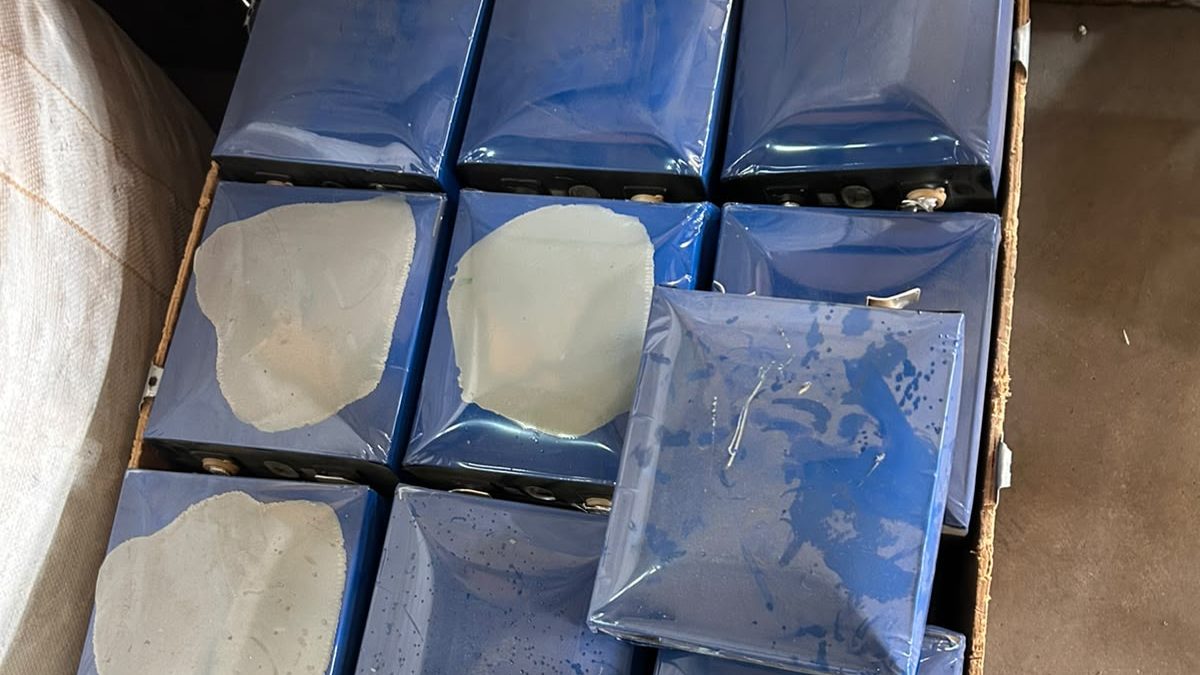
Yes, in most cases. An electric vehicle pack rarely fails as a whole: one module fails, or the management electronics, a contactor or a sensor. With testing and a component swap, the pack returns to service for a fraction of the cost of a new one. Ecobaterías runs the testing and issues a state-of-health certificate as part of its 2026–2027 pilot program, with limited capacity; what is not worth repairing goes to second life or to recycling at its Santiago plant.
Source: Ecobaterías testing protocol · 2026-09-18
A vehicle pack holds between 4 and 30 modules, each with dozens of cells, plus a battery management system (BMS), contactors, fuses, sensors and a cooling circuit. The vehicle shows a single symptom — range loss, a fault code, reduced power — for causes sitting in very different layers.
In practice, failures fall into four families: cell or module (one branch drifts out of balance and drags the whole pack down), electronics (BMS, temperature sensors, communication), power path (contactors, fuses, connectors, harnesses) and thermal (pump, coolant, leaks). Only the first involves touching cells; the other three are solved by replacing a part.
That is why the expensive mistake is diagnosing from the fault code and quoting a new pack. The code says where the problem showed up, not where it is.
State of health (SOH) is the battery’s current usable energy expressed as a percentage of its value when new. The vehicle’s BMS estimates it from its own history, but that estimate can drift by several points: it calibrates with use, and a pack that sat idle, changed owners or went through a thermal event carries a stale estimate.
Independent testing cross-checks that reading with measurements of its own: insulation, cell voltage, internal resistance, a capacity test and, in the lab, incremental capacity analysis or impedance spectroscopy. Testing a pack takes between 30 minutes and 6 hours depending on the format and on access to the modules.
Source: Ecobaterías testing protocol · 2026-09-18
Once SOH is measured, the decision stops being an opinion. The four routes — direct reuse, refurbishment, second life and recycling — are described in detail in lithium battery testing and repair, with the thresholds in the table above.
The logic is the same, with larger modules and maintenance contracts in the middle. In October 2025, RED Movilidad operated 3,544 electric buses, around 55% of the Santiago fleet, and as of February 2026 the country had 4,088 electric buses.
Sources: Chilean Ministry of Transport and Telecommunications (2025-10-31) and Latamobility (2026-02-28), compiled by Ecobaterías (opens in a new tab)
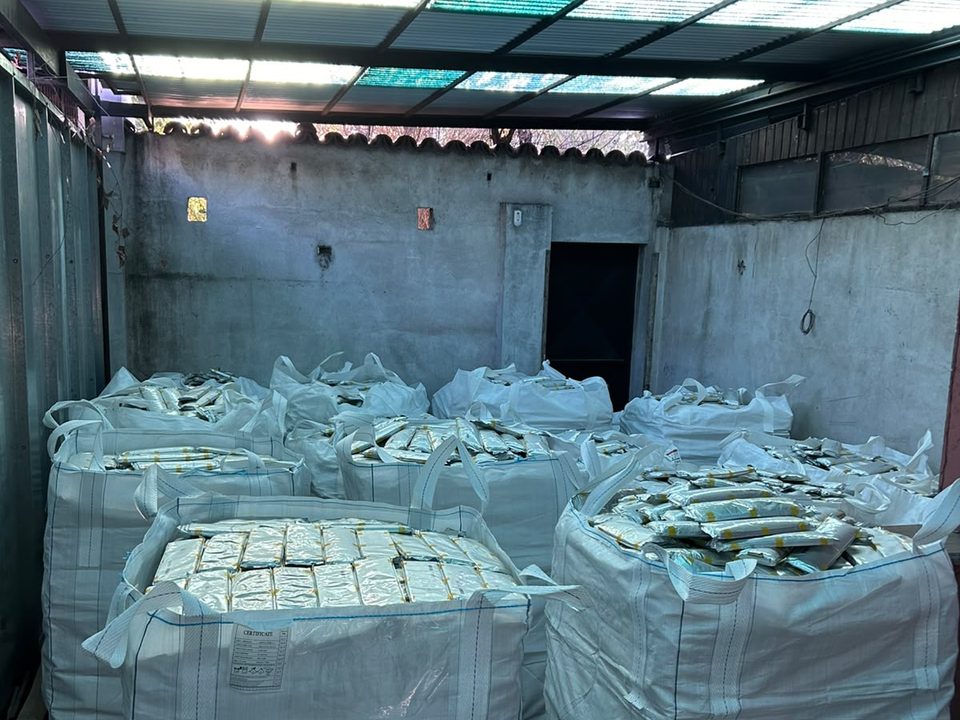
The first cohort, the one that entered service between 2017 and 2019, reaches the end of its leasing and maintenance contracts in 2028–2029: on the order of 200 buses of 324 kWh, that is, some 500 to 650 metric tons of packs that will need testing to choose between life extension, refurbishment or removal. That case is developed in electric bus batteries in Chile.
Source: Ecobaterías estimate for the 2017–2019 cohorts, based on compiled public sources · 2026-09-18
In stationary storage, the National Electrical Coordinator recorded 3,072 MW / 13,528 MWh of BESS in operation and testing in April 2026. That is capacity connected to the grid, not waste: modules removed under warranty or during repowering usually have high SOH and are natural second-life candidates, as explained in end-of-life BESS.
Source: National Electrical Coordinator, capacity in operation and testing as of April 2026, reported by the trade press (opens in a new tab) · 2026-04-30
The EPR law for batteries (Ley 20.920, Law No. 20,920) puts reuse ahead of recycling. The Ministry of the Environment’s draft battery decree proposes collection targets for lithium-ion batteries — no target for the first two years, 15% in the third and 50% from the tenth — and that at least 30% of the target be met through preparation for reuse. It is a text in consultation, not a rule in force: the ministry’s deadline to propose the decree is January 29, 2027.
Source: Chilean Ministry of the Environment, draft battery decree (Res. Ex. 821/2026) (opens in a new tab) · 2026-09-18
Meanwhile Supreme Decree (DS) 148/2003 applies: a discarded battery is hazardous waste and its generator must manage it through licensed carriers and licensed recipients. Before hiring anyone, it is worth reviewing what to demand from an authorized lithium battery waste manager in Chile. For photovoltaic modules, by contrast, the calendar is already fixed by Supreme Decree (DS) 22/2025.
Ecobaterías receives vehicle, bus, storage and micromobility packs in Santiago, tests them under a five-stage protocol and issues a state-of-health certificate, a per-module report and a valorization certificate for whatever goes to recycling. If your case is a one-off handover rather than testing, the route is in where to recycle lithium batteries in Chile.
What cannot be repaired and does not qualify for second life is processed at our hydrometallurgical plant, authorized by the Seremi de Salud of the Santiago Metropolitan Region (Chile’s regional health authority) for the hydrometallurgical process (compliance and permits). Based on our review of licensed waste managers as of September 2026, we are not aware of another plant in Chile that recycles lithium-ion batteries and sells the recovered mineral to mining; the documentation is available to counterparties under due diligence.
datos/estadisticas.json.Updated September 19, 2026 · Reviewed by the Ecobaterías EPR compliance lead
Ecobaterías technical team. Ecobaterías recycles lithium batteries in Chile and returns the recovered minerals to mining. The battery testing and repair line runs as a 2026–2027 pilot program with limited capacity.
Tell us the model, year and symptom. We will tell you which test applies, how long it takes and what information you get before choosing between repair, second life and recycling.
Failure modes, test protocol and what can be repaired inside a lithium-ion pack.
When a decommissioned module is fit for stationary storage.
Storage, packaging and labeling before a pickup with licensed transport.