Used solar modules: testing and reuse
The full protocol for grading, repairing and reselling with measured power.

Practical guide
A decommissioned module is neither trash nor scrap: it is an asset whose power has yet to be measured. This guide covers what the law requires, how much power a used panel keeps, and the order in which to decide.
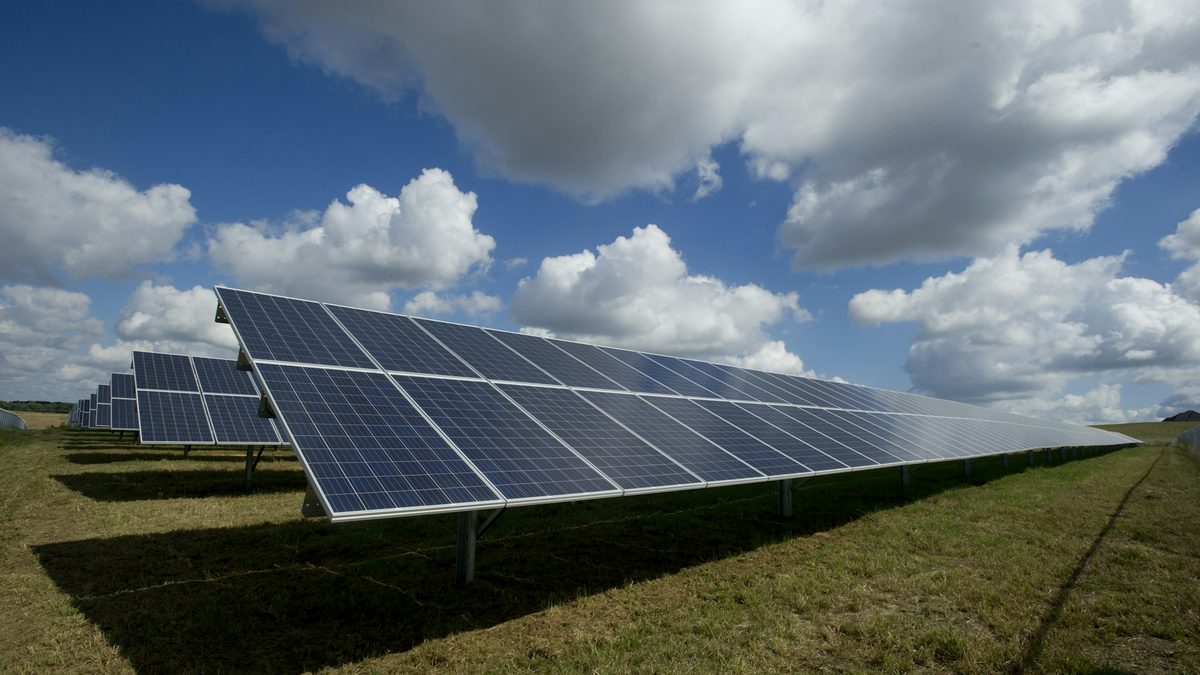
Test first, decide second. Most modules removed during repowering or after system faults keep a good share of their power and have no safety defects; sending them straight to recycling destroys recoverable value. In Chile a discarded panel is managed as hazardous waste until it is declassified, and Supreme Decree (DS) 22/2025 has already set the target calendar. Ecobaterías tests every module, reuses the ones that qualify with measured power, and recycles the rest.
Source: Ecobaterías Solar Observatory · 2026-09-11
The Ecobaterías Solar Observatory tracks 756 photovoltaic plants in operation in Chile, adding up to 12,884 MW of nameplate capacity and about 34.9 million modules installed, equivalent to roughly 1.0 Mt of material that will reach end of life. Around 6,016 t of broken modules have already been generated.
Source: Ecobaterías Solar Observatory · 2026-09-11
The flow does not arrive all at once. Through 2029 the stream is early and steady — construction breakage, operating faults, warranty claims and accidents — in the order of 55,000 to 80,000 modules per year. The large wave arrives when the offtake contracts of the 2013–2016 plants expire and the flow jumps to 400,000–850,000 modules in expiry years: El Romero in 2030 (776,000 modules), El Pelícano in 2033, Amanecer Solar CAP and Pozo Almonte II+III in 2034, and Javiera in 2035. The first plant to reach technical end of life is Tambo Real, in 2037.
Source: Ecobaterías Solar Observatory · 2026-09-11
The Ministry of the Environment, for its part, estimates on the order of 11,000 t per year of early module waste.
Source: Chilean Ministry of the Environment, estimate of early photovoltaic module waste (opens in a new tab) · 2026-09-18
Sources: Ley 20.920, Library of the National Congress of Chile · DS 22/2025, Official Gazette (open in a new tab) · 2026-09-18
Manufacturer power warranties usually describe an annual degradation that leaves a ten-year-old module near 90% of its nameplate power and a twenty-year-old one between 80% and 88%. That is a contractual expectation, not a measurement: a real batch mixes modules that beat the curve with modules carrying cell cracks, hot spots or insulation loss that miss it by a wide margin.
That is why testing is done module by module, not by sampling, when the batch is going to be resold: visual inspection, dry and wet insulation tests, electroluminescence to reveal cracks invisible to the eye, and an I-V curve under controlled conditions to measure real power. A module can pass the electrical tests and fail the wet-leakage test: that is precisely the defect you cannot see.
With those results the module falls into one of four classes, the same criterion we apply in used solar module testing and reuse.
| Class | Measured power | Destination |
|---|---|---|
| P1 | ≥ 85% | Resale with measured-power label and warranty |
| P2 | 80–85% | Reuse in less demanding projects |
| P3 | 70–80% | Off-grid systems only |
| Recycling | < 70% | Recovery of aluminum, glass and metals |
Swipe to see the full table
Source: Ecobaterías testing protocol · 2026-09-18
The junction box and bypass diodes, the connectors and cabling, the frame seal and superficial backsheet damage can all be repaired. These are accessory failures, not cell failures, and they return a module to service in minutes.
Broken glass, delamination, cell cracks and severe hot spots cannot be repaired. Those modules go to recycling, where the aluminum frame, the glass and the metals are recovered; the full circuit is described in solar panel recycling in Chile.
Testing takes about 6 minutes per module, and a line processes between 150 and 250 modules per day and shift. That matters for planning: a batch of 10,000 modules is not tested in a week.
Source: Ecobaterías testing protocol · 2026-09-18
If you also have end-of-life batteries on the same site, preparing that batch follows different rules: they are in our guide on how to prepare end-of-life batteries for recycling, and the handover circuit is in where to recycle lithium batteries in Chile.
datos/estadisticas.json. · Cover photograph: American Public Power Association.Updated September 19, 2026 · Reviewed by the Ecobaterías EPR compliance lead
Ecobaterías technical team. Ecobaterías recycles lithium batteries in Chile and returns the recovered minerals to mining. The photovoltaic module testing and reuse line runs as a 2026–2027 pilot program with limited capacity.
Send us brand, model, year and quantity. We test a sample and tell you how many modules qualify for reuse and how many go to recycling, before the batch is moved.
The full protocol for grading, repairing and reselling with measured power.
What is recovered from a module that no longer qualifies for reuse.
Calendar, obligated parties and how recovery targets are calculated.